
Dallas County Property Tax Protest:
Lower Your DCAD Appraisal
Your DCAD notice of appraised value sets the number your Dallas County property taxes are based on, and that number is not always right. Every year, homeowners in Dallas, Irving and Garland file protests to bring an inflated value back in line with what their home is really worth.
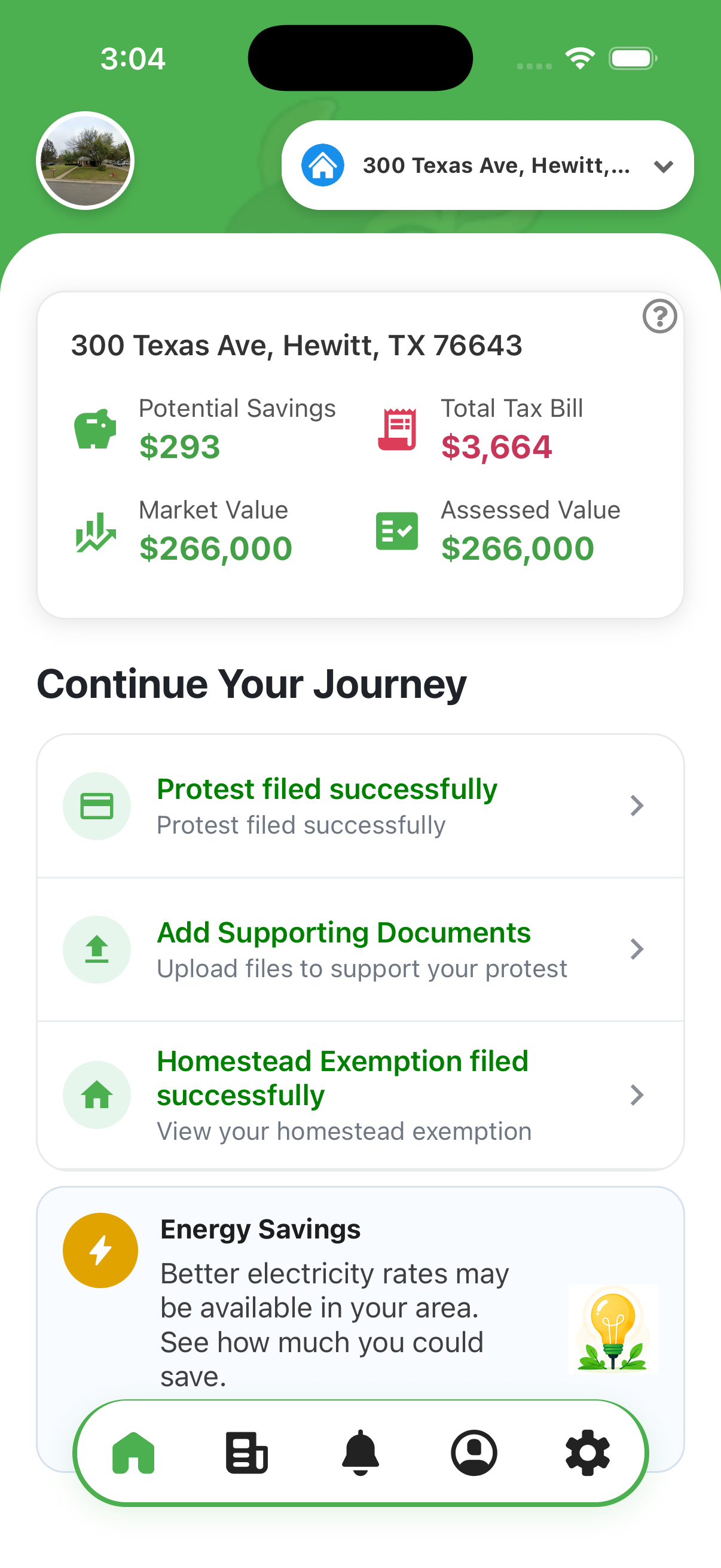
The Andy App makes it simple to protest your Dallas County property taxes from your phone. We help you check your value, gather the right evidence and file before the deadline, so you are not overpaying for another year.
- Check your DCAD value against real nearby sales
- Gather the right evidence in one place
- File before the deadline, all from your phone
Appraisal district
DCAD
Dallas Central Appraisal District
Main cities
Dallas, Irving, Garland
Mesquite, Richardson
Protest deadline
May 15
or 30 days after your notice
Filing form
Form 50-132
Comptroller Notice of Protest
Official site
dallascad.org
Opens in a new tab
Local market
Why Dallas County Homeowners Protest Their Appraisal
From Lakewood bungalows to new builds in Irving and Garland, Dallas County homeowners see appraisals move fast when nearby sales heat up. DCAD values hundreds of thousands of homes at once using mass appraisal, so errors on individual homes are common.
Local data · added before launch
- DCAD median residential value change, current tax year
- Share of Dallas County protests that received a reduction
Source: Dallas Central Appraisal District annual report or Texas Comptroller
How it works
How to Protest Your Dallas County Property Taxes
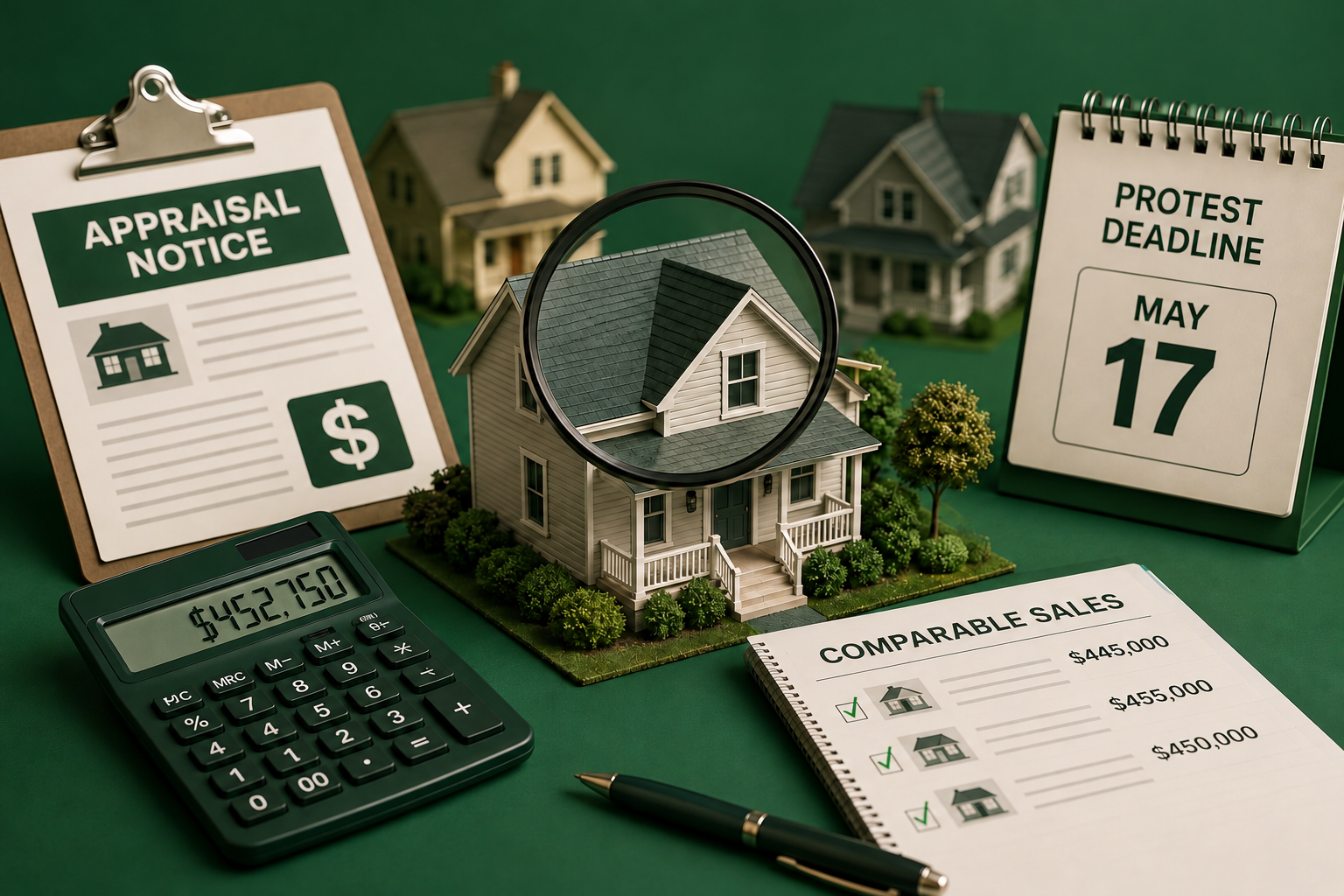
Protesting in Dallas County follows the process set by the Texas Property Tax Code. Here is how it works, step by step.
Step 1: Review your DCAD notice of appraised value
DCAD typically mails notices in spring. Check the market value, the appraised value and your exemptions, and compare them with recent sales of similar homes near you. If your notice looks high, or something is listed wrong, such as square footage, bathrooms or lot size, you have grounds to protest.
Step 2: File your protest before the deadline
File a Notice of Protest (Comptroller Form 50-132) with Dallas Central Appraisal District, using its online portal where available, by mail or in person. With The Andy App, you can start your Dallas County protest from your phone in a few minutes.
Step 3: Build your evidence
Strong protests rest on facts: comparable sales, photos of needed repairs, contractor estimates and errors in the appraisal record. The more specific your evidence, the better your chance of a reduction.
Step 4: Settle informally or attend your ARB hearing
Many protests settle at an informal review with a DCAD appraiser. If you cannot agree, your case goes to the Dallas County Appraisal Review Board (ARB), an independent panel that hears your evidence and decides your value.
Key dates
Dallas County Protest Deadline and Key Dates
In Texas, the protest deadline is generally May 15 or 30 days after DCAD mails your notice, whichever is later. If the deadline lands on a weekend or holiday, it moves to the next business day. Your notice shows your exact date.

Spring
Notices of appraised value mailed
May 15 (or 30 days after notice)
Protest deadline
Late spring to summer
Informal reviews and ARB hearings
October to January
Tax bills mailed; payment due January 31
Typical Texas dates. Your DCAD notice shows your exact deadline.
Build a strong case
Evidence That Wins DCAD Protests
The Dallas County ARB decides on evidence, not opinions. The most persuasive evidence usually includes:
Comparable sales
Recent sales of similar homes nearby that sold for less than your appraised value.
Unequal appraisal
Similar homes in your area appraised lower than yours.
Condition issues
Photos and repair estimates for foundation, roof, plumbing or storm damage.
Record errors
Wrong square footage, room counts or features in the DCAD record.
The Andy App helps you pull this together in one place before your hearing.
Start building my case →The appraisal district
Dallas Central Appraisal District (DCAD): What to Know
Dallas Central Appraisal District values every property in Dallas County for tax purposes. It does not set tax rates or collect taxes, which are handled by local taxing units and the county tax office. You can look up your account and value on the DCAD property search, then use those details to start your protest.
Exemptions
Homestead Exemption and Your Dallas County Property Taxes
If the home is your primary residence, make sure your homestead exemption is on your notice. A homestead exemption lowers your taxable value, and Texas limits how much the appraised value of a homestead can rise each year (generally 10%). A protest and an exemption work together: the exemption reduces what is taxable, and a protest challenges the value itself.
Homestead exemption
Lowers what is taxable
Applies to your primary residence. Texas generally caps a homestead's appraised value increase at 10% a year.
Property tax protest
Challenges the value itself
Argues the appraised value is too high, with sales, condition and record evidence.
The two work together to lower your bill.
Protest Your Dallas County Property Taxes With The Andy App
You do not have to fight your DCAD appraisal alone. The Andy App guides Dallas-area homeowners through every step, from checking your value to filing and preparing for your hearing, all from your phone.
Check for a property tax refund →